

What Is Reefer Trucking? A Complete Guide

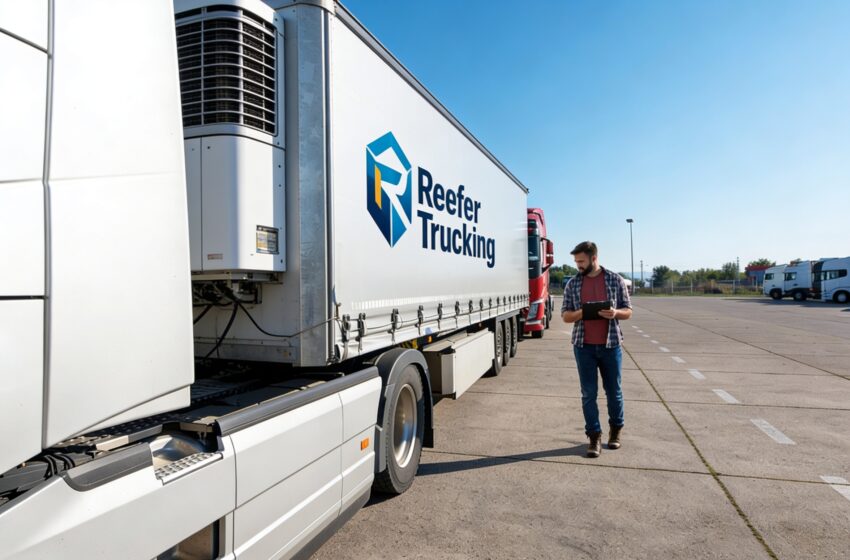
If you’ve ever bought fresh fruits from a supermarket, received a life-saving medicine delivered to a pharmacy, or ordered a meal kit at your doorstep — a reefer truck made that possible. Most people don’t think twice about it, but behind every fresh product that travels hundreds of miles without spoiling is a refrigerated truck working silently and efficiently.
Reefer trucking is one of the most essential — and least talked about — segments of the entire logistics industry. Whether you’re a fleet owner thinking about expanding your operations, a shipper trying to understand your freight options, or just someone curious about how the cold chain works, this guide covers everything you need to know about reefer trucking from the ground up.
So, What Exactly Is Reefer Trucking?
The word “reefer” is simply short for refrigerated. In the trucking world, a reefer refers to a refrigerated trailer attached to a semi-truck that is capable of maintaining a precise internal temperature — whether that means keeping goods frozen, chilled, or even slightly warm.
Unlike a standard dry van, which is just an enclosed trailer with no temperature control, a reefer unit is a full climate-control system on wheels. It can maintain temperatures anywhere between 55°F down to -20°F for most commercial loads, and specialized medical or chemical-grade units can go as low as -85°F.
The term “reefer trucking” covers the entire process — loading, hauling, unloading, and staging perishable or temperature-sensitive products. It’s not just about the truck; it’s about the entire supply chain discipline that keeps temperature-sensitive cargo safe from origin to destination.
A Brief History
The reefer truck has been around longer than most people realize. The concept of refrigerated transport dates back to the 1920s, when the ice cream industry needed a solution to transport frozen products across longer distances without melting. Early reefer units relied on actual ice, but as mechanical refrigeration technology evolved through the mid-20th century, diesel-powered refrigeration units became the industry standard.
Today, reefer trucking is a multi-billion dollar industry. According to DAT Freight & Analytics, one of the largest freight data platforms in North America, the US and Canadian refrigerated trucking market was estimated to reach $12 billion by 2025 — a figure that highlights just how critical this segment is to the modern economy.
How Does a Reefer Truck Work?
A reefer trailer isn’t just a truck with a big cooler in the back. The system is far more sophisticated than that.
At its core, a reefer trailer has three main components working together:
1. The Refrigeration Unit (TRU)
The Trailer Refrigeration Unit is the engine of the reefer system. It runs independently from the main truck engine, which means the refrigeration continues even when the truck is parked, idling, or the engine is turned off. Most TRUs are powered by diesel, though electric and hybrid models are increasingly common.
2. High-Grade Insulation
The trailer walls, floor, and ceiling are built with thick insulation material that prevents heat from seeping in. This is what makes it possible for a reefer to maintain sub-zero temperatures even when it’s 40°C outside.
3. Temperature Monitoring & Controls
Modern reefer trucks have digital temperature controls and sensors that allow drivers and dispatch teams to monitor cargo conditions in real time. Any deviation from the set temperature triggers an alert, so corrective action can be taken immediately before the cargo is compromised.
One important thing to understand: a reefer truck doesn’t cool down warm cargo. It only maintains the temperature at which the cargo was loaded. This is why pre-cooling the trailer before loading is a non-negotiable step in every reefer haul.
What Cargo Does Reefer Trucking Carry?
This is where reefer trucking gets interesting — the range of cargo is much wider than most people assume. According to DAT, the goods transported by reefer trucks include:
- Fruits and vegetables
- Meat, seafood, and poultry
- Dairy products and eggs
- Frozen or baked goods
- Pharmaceuticals and vaccines
- Chemicals and industrial liquids
- Cosmetics (lotions, creams, lipstick)
- Flowers and houseplants
- Electronics like TVs, tablets, and computers
- Fine art and antiques
Yes — electronics and fine art. Extreme temperature fluctuations can damage sensitive circuits or crack delicate materials, so reefer trailers offer a stable environment for high-value, fragile items too. The versatility of reefer freight is one of the biggest reasons fleet owners find it attractive.
Types of Reefer Trucks
Not all reefer trucks are the same. Depending on the cargo and the haul, you’ll encounter a few different setups:
Single-Temperature Trailers
These are the most common type. The entire trailer is held at one consistent temperature throughout the haul — ideal for single-product shipments like frozen meats or fresh produce.
Multi-Temperature Trailers
These trailers have separate compartments, each with its own independent temperature control. You might have one section at -18°C for frozen goods and another section at 4°C for fresh vegetables — all in the same trailer, on the same trip. This is highly efficient for grocery distributors or food-service companies.
Specialized Reefer Builds
Some cargo — think biotech samples, vaccines, or exotic chemicals — demands additional features like humidity control, cargo sensors, or extra insulation. These custom-built reefer trailers cater to very specific industry requirements.
Hybrid Reefer Trucks
These can switch between refrigerated and standard dry-van mode, making them flexible for fleet operators who want to maximize utilization across seasonal demand fluctuations.
Reefer Trucking Regulations
Because reefer trucks often carry food and medicine, there are strict safety regulations governing how this cargo must be handled. In the United States, the Food and Drug Administration (FDA) established the Food Safety Modernization Act (FSMA) of 2011, which directly governs how food is transported.
Under the Sanitary Transportation Rule of the FSMA, reefer carriers must comply with four key areas:
- Vehicles & Equipment — Trucks must maintain proper temperatures and be thoroughly cleaned between loads to prevent cross-contamination
- Transportation Operations — Carriers must take active steps to prevent contamination during transit
- Driver Training — All personnel must complete documented training in sanitary transportation practices
- Record Keeping — Carriers must maintain logs of all activities including signed agreements and training completion certificates
For fleet operators in India, while the FSMA is a US-specific regulation, the Food Safety and Standards Authority of India (FSSAI) has established similar hygiene and temperature standards for food transportation that apply to domestic reefer operations.
Pros of Reefer Trucking
If you’re a fleet owner weighing whether to add reefer capacity, here’s what works in your favor:
- Consistent, year-round demand — Food and medicine don’t have an off-season. Unlike construction freight or holiday goods, reefer loads move 365 days a year
- Higher freight rates — Reefer loads consistently pay more than dry freight because of the specialized equipment and expertise required
- Diverse cargo options — From groceries to pharmaceuticals to cosmetics, the variety of reefer freight keeps your options wide open
- Flexibility — When you don’t have a reefer load, you can switch off the cooling unit and use the trailer as a standard dry van
- Long-term client relationships — Clients who trust you with perishable cargo tend to stick around. Once you prove yourself reliable, repeat contracts follow naturally
Cons of Reefer Trucking
Reefer trucking comes with a more demanding operational profile. Here’s what to expect on the downside:
- Higher maintenance costs — The refrigeration unit, sensors, and insulation all need regular upkeep, and breakdowns can be expensive
- Pre-cooling time — Drivers must pre-cool the trailer before reaching the pickup point, which adds time to every haul
- Greater driver responsibility — On top of standard driving duties, reefer drivers must manage temperature logs, cargo inspections, and equipment monitoring
- Tighter delivery windows — Perishable freight doesn’t wait. Delays that would be tolerable in dry van shipping can mean a rejected load in reefer trucking
- Higher fuel consumption — Running the TRU continuously burns additional diesel, which cuts into profit margins if not priced into rates correctly
Who Uses Reefer Shipping?
The list of industries that depend on reefer trucking is longer than most people expect:
- Grocery chains and food distributors rely on reefer trucks to move produce, dairy, and meat from farms and processing plants to store shelves
- Pharmaceutical companies and hospitals use refrigerated transport for vaccines, biologics, and temperature-sensitive medications
- Restaurant chains and food-service businesses need fresh meat, fish, and vegetables delivered on a daily basis
- Florists and nurseries ship cut flowers and plants that wilt quickly without climate control
- E-commerce companies shipping meal kits, specialty foods, or health products
Any business where the product loses quality, safety, or value without temperature control is a potential reefer shipping client.
Is Reefer Trucking Right for Your Fleet?
The decision to add reefer capacity to your fleet isn’t one to take lightly. The upfront cost of a reefer trailer is significantly higher than a standard dry van, and the operational demands are greater. But the return — in the form of higher per-mile rates, stable demand, and premium client relationships — makes it one of the more rewarding directions a growing fleet can take.
If you’re managing a fleet and looking to expand into reefer trucking, start by researching load board platforms to understand current reefer freight rates in your lanes. Invest in driver training, especially around temperature management and FDA/FSSAI compliance, before taking your first load.
The cold chain is only going to grow. With rising e-commerce in food and pharma, demand for reliable reefer operators has never been higher. Getting your fleet positioned in this space now — while the market is still expanding — gives you a serious long-term advantage.